


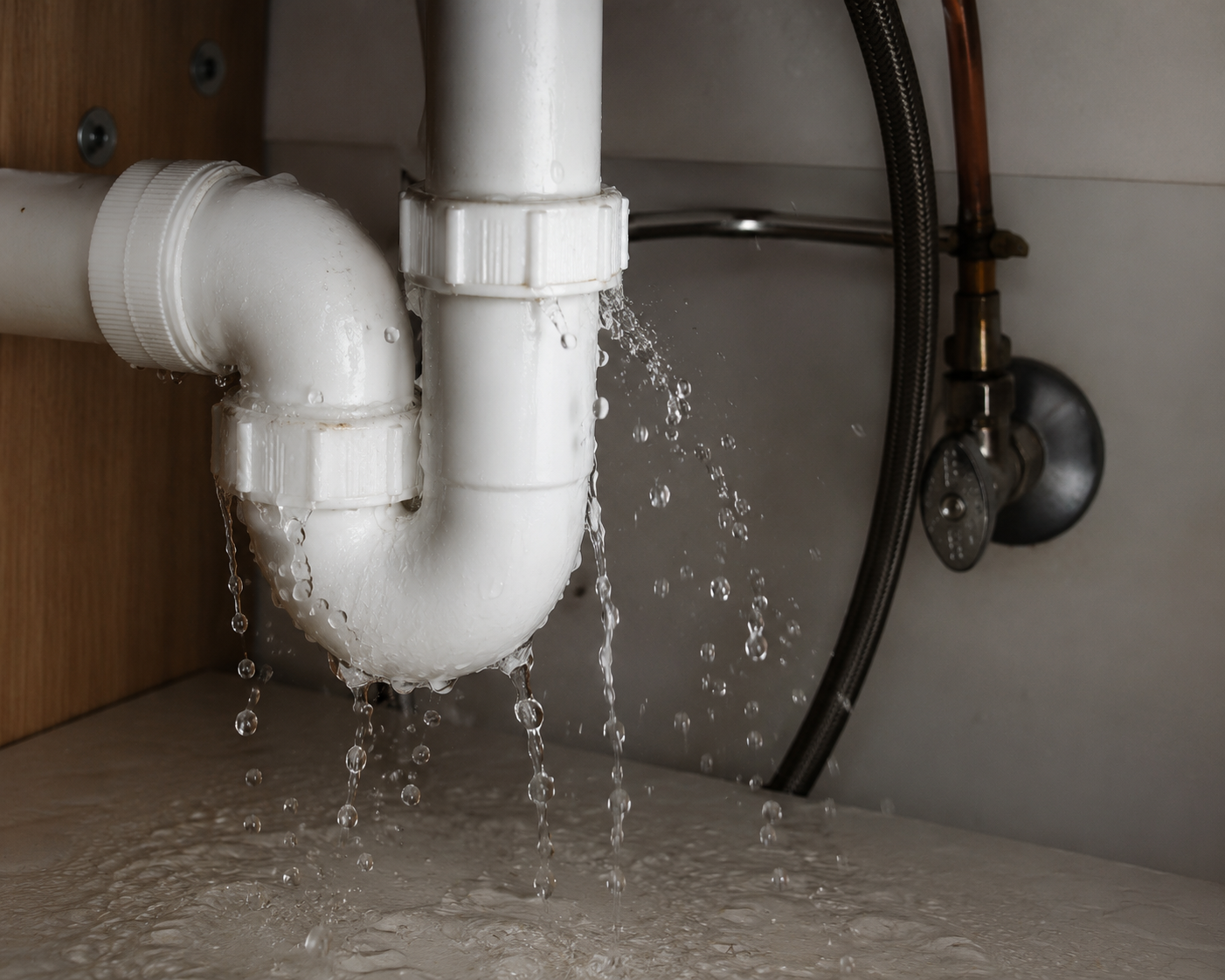
A plumbing leak does not need to create a visible puddle to damage your home. A slow drip from a pipe, connection, or fixture can release moisture inside a wall cavity for days or weeks before the problem becomes obvious. During that time, drywall, insulation, wallpaper, and wood framing may remain damp enough for mold to develop.
Hidden leaks can create wet spots inside walls and lead to mold growth in areas homeowners cannot easily see [1]. Here are ways plumbing leaks can cause mold behind walls, which warning signs to watch for, and what to do when you suspect a concealed problem.
How Can a Plumbing Leak Cause Mold Behind a Wall?
Mold spores naturally exist in indoor and outdoor air, but they need moisture to begin growing. When a concealed pipe leaks, water may soak into nearby building materials and remain trapped inside the wall.
Mold can grow around leaking pipes and on materials such as drywall, insulation, wallpaper, wood, and ceiling tiles [2]. Since wall cavities receive little airflow, damp materials may not dry quickly. This can allow mold to spread before staining or damage appears on the visible side of the wall.
Prompt action is important because water-damaged areas should generally be dried within 24 to 48 hours to help prevent mold growth [3].
Signs You May Have a Hidden Plumbing Leak
A musty odor is often one of the first clues that moisture or mold may be concealed behind a surface. Other warning signs can include:
- Brown, yellow, or dark water stains
- Bubbling, cracking, or peeling paint
- Soft, swollen, or warped drywall
- Damp baseboards or flooring
- The sound of dripping or running water
- An unexplained increase in your water bill
- Mold that returns after the surface has been cleaned
Light stains and strong musty odors may indicate that water is trapped inside walls or beneath flooring [4]. Although these symptoms do not always confirm a plumbing leak, they should not be ignored.
Why Mold May Appear Before the Leak Is Obvious
Water often travels along pipes, wall studs, and other structural materials before becoming visible. This means the wet area may not be located directly behind the stain you notice.
Mold may also grow on the back of drywall, wallpaper, paneling, or cabinets. Hidden mold can develop inside walls around leaking or condensing pipes, even when the room-facing surface initially looks normal [3]. Opening the wall without proper precautions may disturb mold growth and release spores into the surrounding area.
What Should You Do if You Suspect a Leak?
The first priority is finding and stopping the source of the water. Cleaning visible mold or painting over a stain will not provide a lasting solution while moisture continues entering the wall.
A plumber can inspect the affected area, locate the concealed leak, and complete the appropriate pipe or fixture repair. After the leak is stopped, wet materials should be dried and evaluated for damage.
Porous materials with extensive mold growth, including drywall and ceiling tiles, may need to be removed because mold can penetrate spaces that are difficult to clean completely [5]. The area should be fully dry before the wall is repaired, painted, or sealed.
When Should You Call a Professional?
A plumber repairs the water source, while a remediation or restoration specialist handles significant mold contamination and damaged materials. Professional cleanup may be appropriate when the affected area is larger than approximately 10 square feet, the damage involves contaminated water, or hidden mold may be disturbed during wall removal.
Water or mold damage involving sewage or other contaminated water should be handled by an experienced professional [6].
Stop Hidden Water Damage Before it Spreads
A small plumbing leak can become a much larger problem when water remains trapped behind drywall. Addressing unusual odors, stains, damp materials, and rising water use early may help limit damage to your walls, insulation, flooring, and framing.
If you suspect water is leaking inside your home, contact My Plumbing Heroes today to schedule professional leak detection and repair. Our experienced plumbers can locate the source, recommend the right solution, and help protect your Northern Virginia home from continued moisture damage.
Sources:
- https://www.epa.gov/mold/text-version-mold-house-tour
- https://www.cdc.gov/mold-health/about/index.html
- https://www.epa.gov/mold/brief-guide-mold-moisture-and-your-home
- https://extension.umn.edu/moisture-and-mold-indoors/dealing-and-preventing-mold-your-home
- https://www.health.ny.gov/publications/7287/
- https://www.epa.gov/mold/mold-cleanup-your-home